Monj and MonjWell
Wellness Application Design
Background
Monj was a skill-building wellness app offered as a workplace perk. The core insight was that many people struggle to eat well simply because they don’t know how to cook. The challenge was to design an experience that made learning feel fun, flexible, and guided.
Concept Development
Early exploration relied heavily on sketching and rapid concept iteration to align the team and build buy-in around a clear product direction. I helped assemble the development team, created the investor deck, led UX and product design, conducted usability testing, and supported the beta launch.
Next Steps
Several years later, I returned to design MonjWell, the next phase of the product. Following a pivot and merger, the experience expanded to include coaching, curriculum, and community, with a focus on helping pre-diabetic users build healthier, sustainable habits.
Recommendation
Mustafa has made critical contributions to our product in a short time, making it simpler, more focused and more immediately impactful. He's a pleasure to work with: very pragmatic, works quickly, challenges your thinking when it needs to be, adapts to budget and technical constraints, gets all the details worked out and is genuinely nice person. I've extended his role on our team twice as of this writing and highly recommend him.
Steve Harshbarger President at Monj + Multipop
Concept Sketches
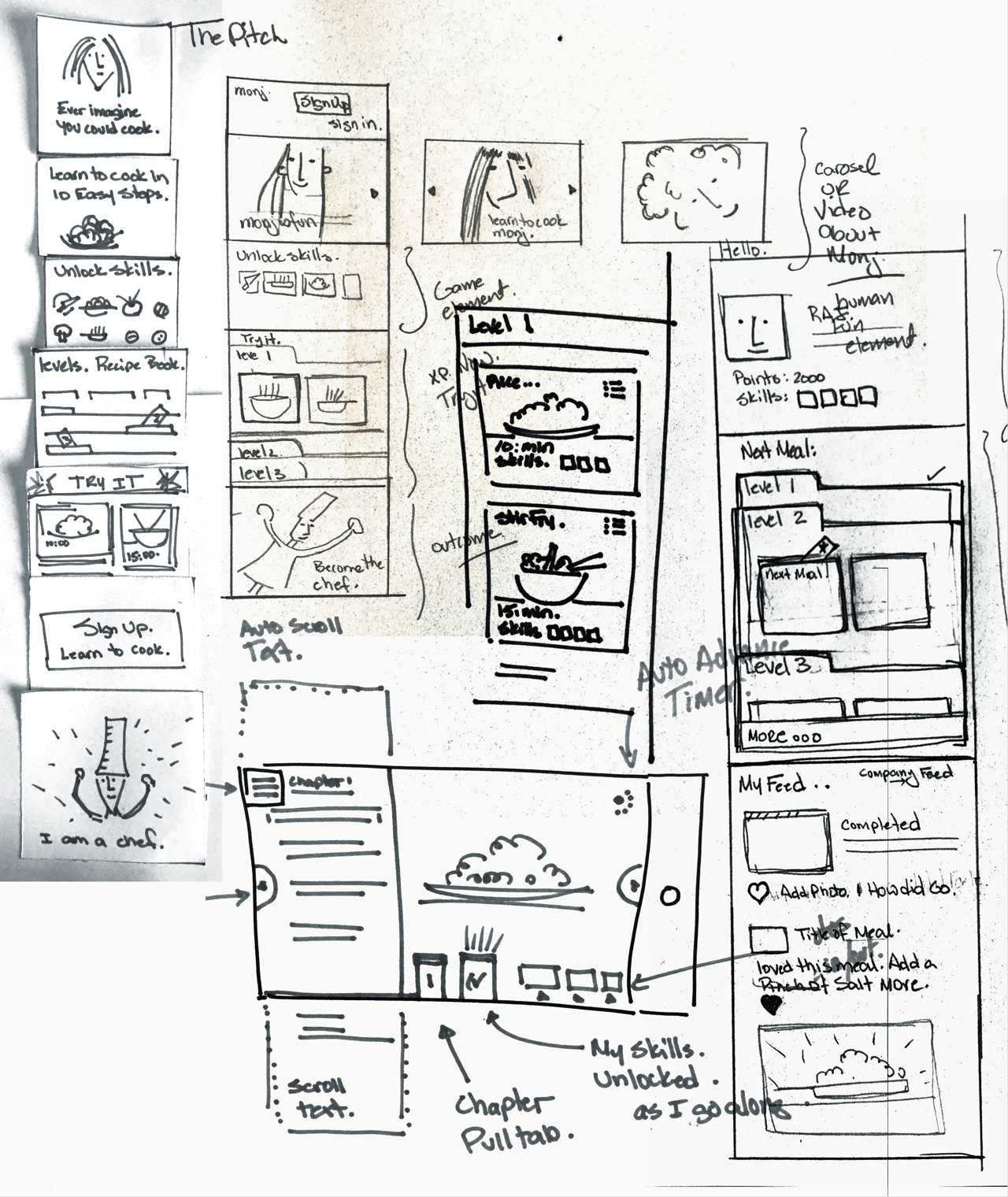
Projects need exploration. The image is a collection of the ideas tossed around before we settled on the ideal experience.
Application Flow
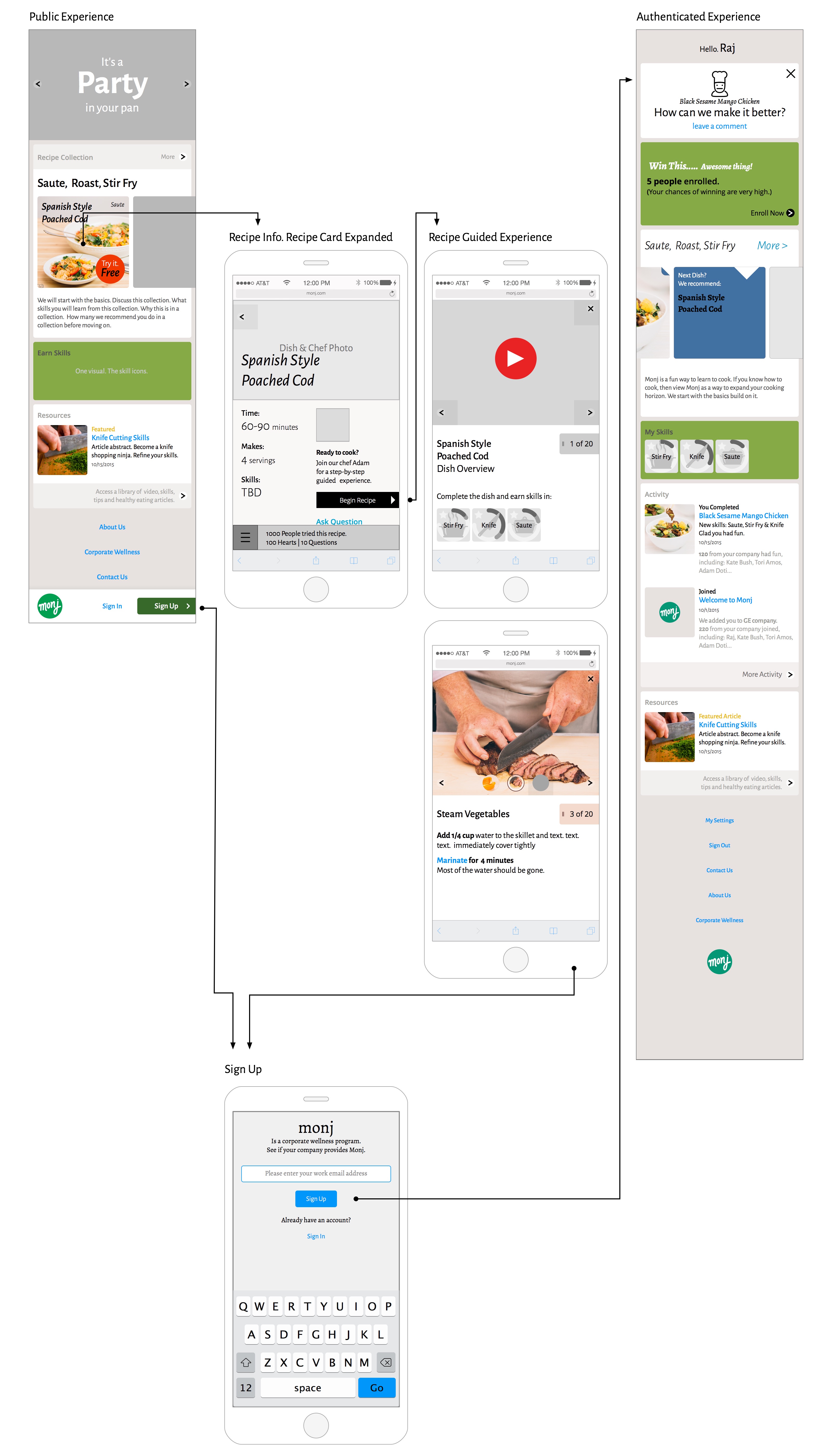
Should we let people sample the application before they sign up? Absolutely. The application flow provides a way of moving a user from public experience to authenticated experience. Even if people don't sign up, you have a marketing win anytime people try your application.
Recipe Cards
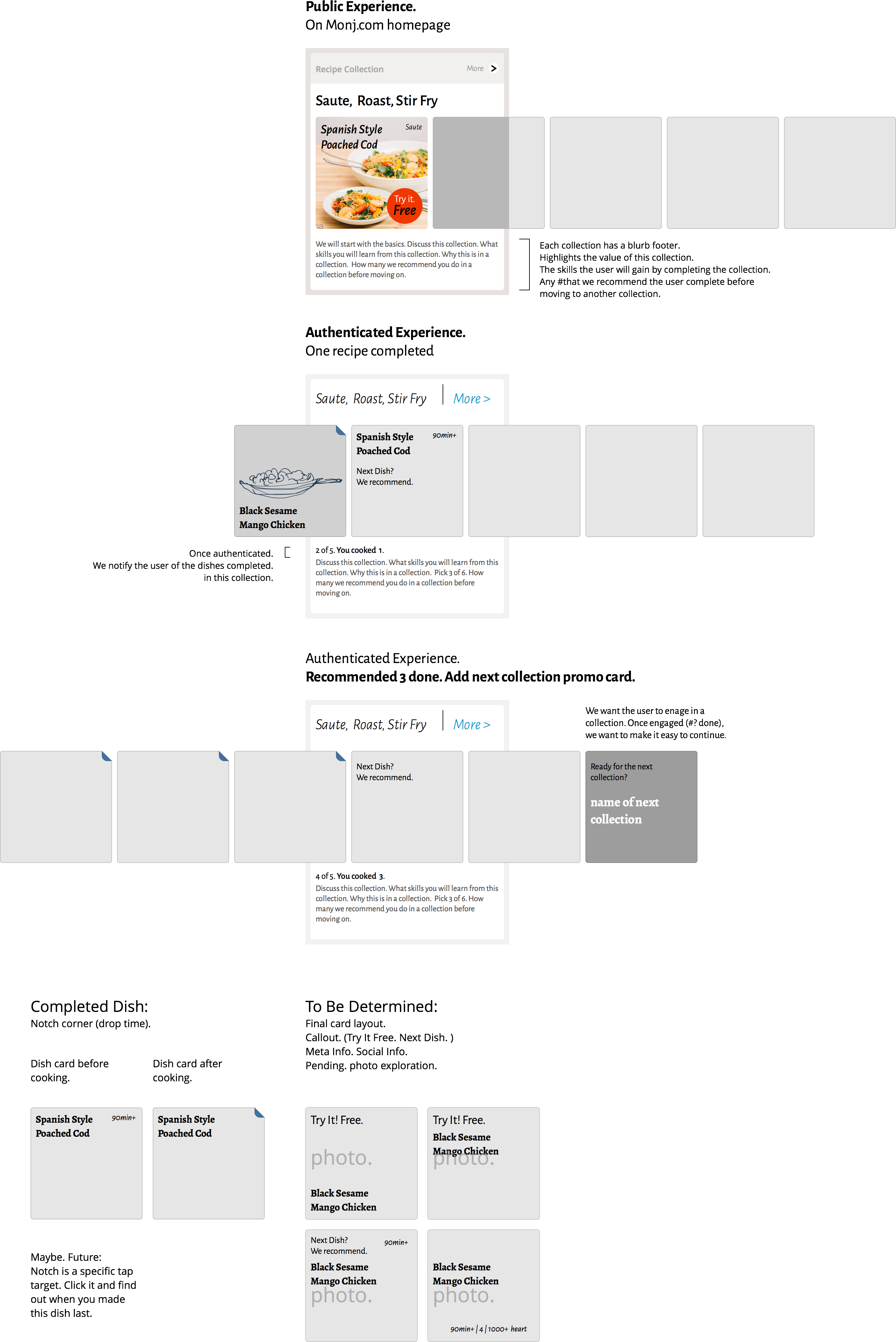
One of the challenges with the experience was finding a model that can balance guided, step-by-step skilling experience with a flexible experience. The recipe card tray was the solution. We automatically recommend the next dish, we track what you accomplished and we automatically move the tray along. When people finish a collection, we recommend the next collection. We also understood that tastes differ and at any moment, people might want to cook something different. The tray slides on touch and people can select a different meal or switch collections. On launch, people always have something to cook.